





Description
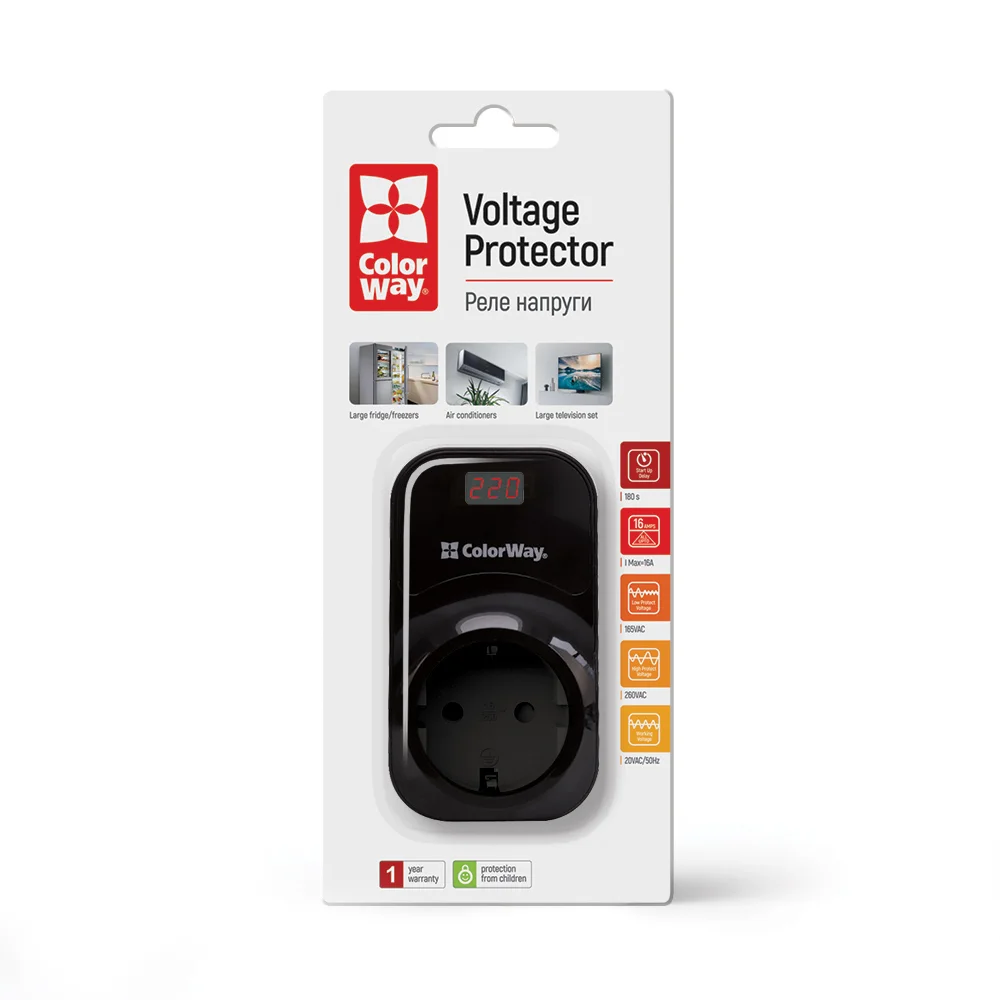
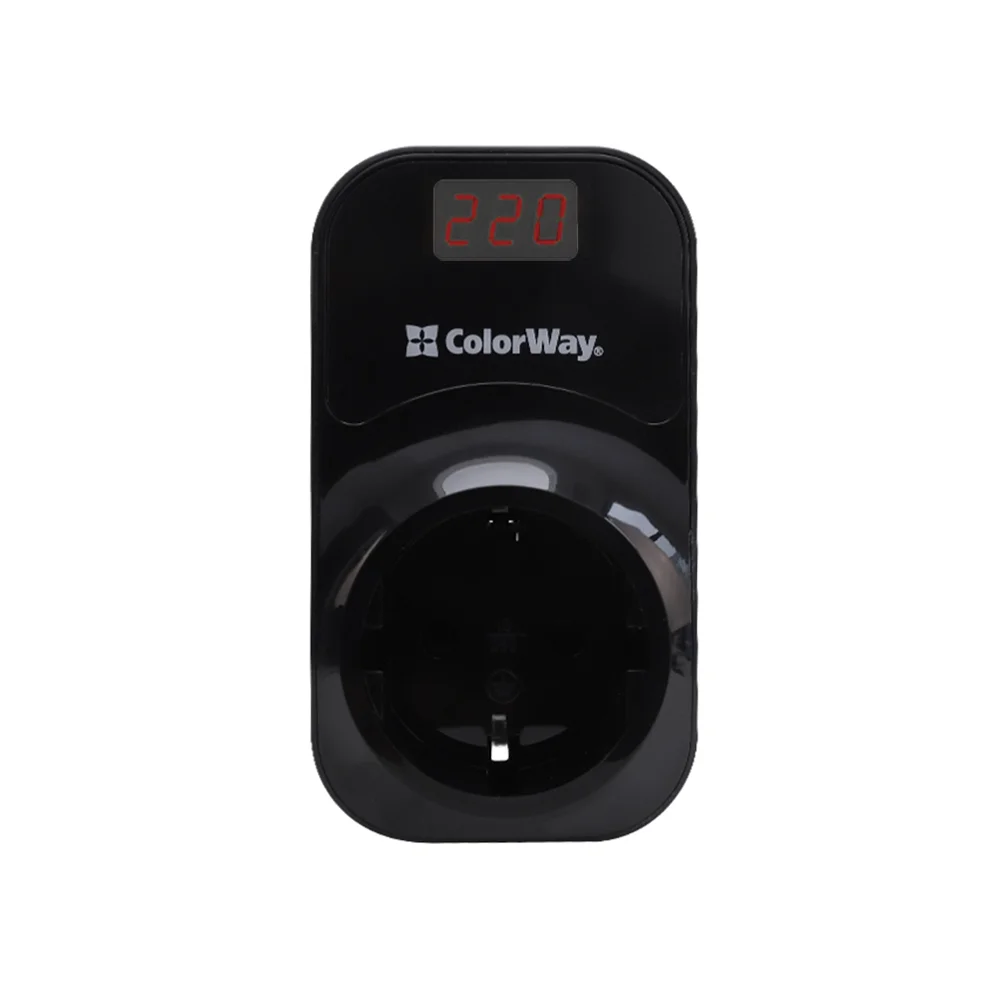
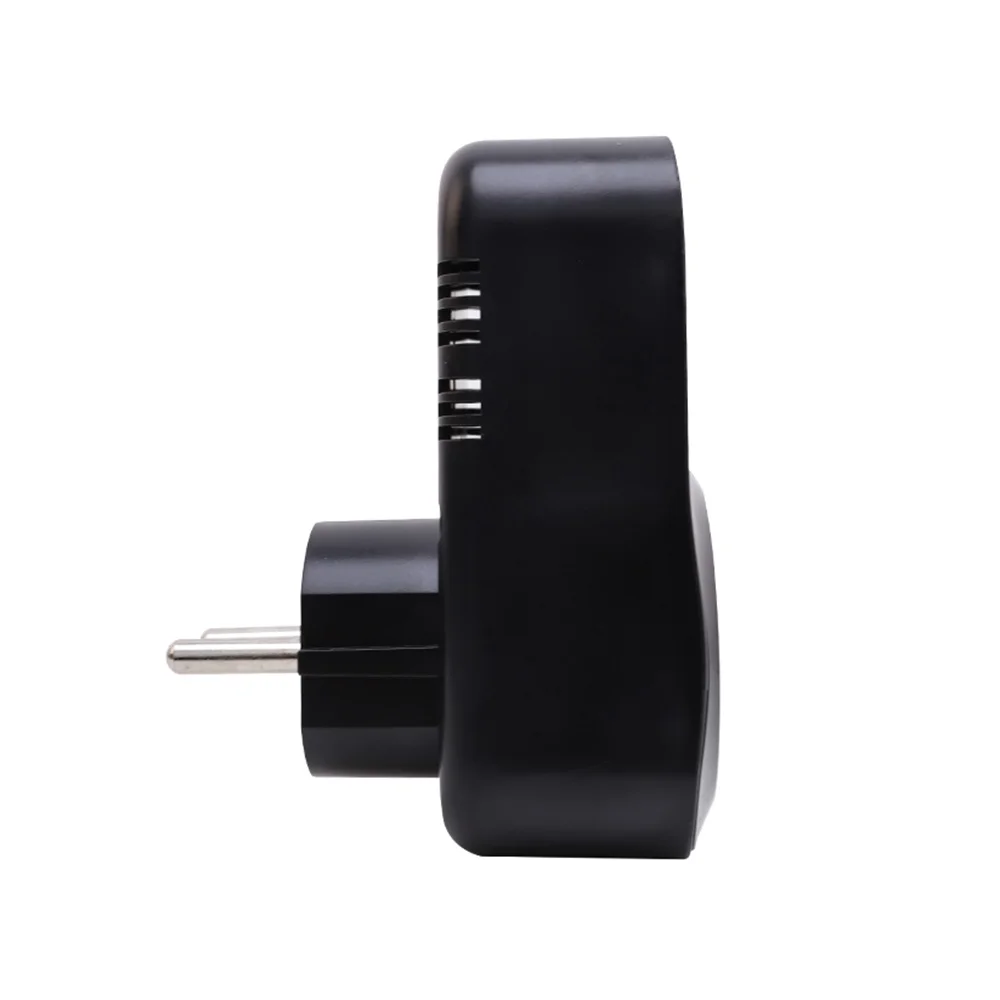
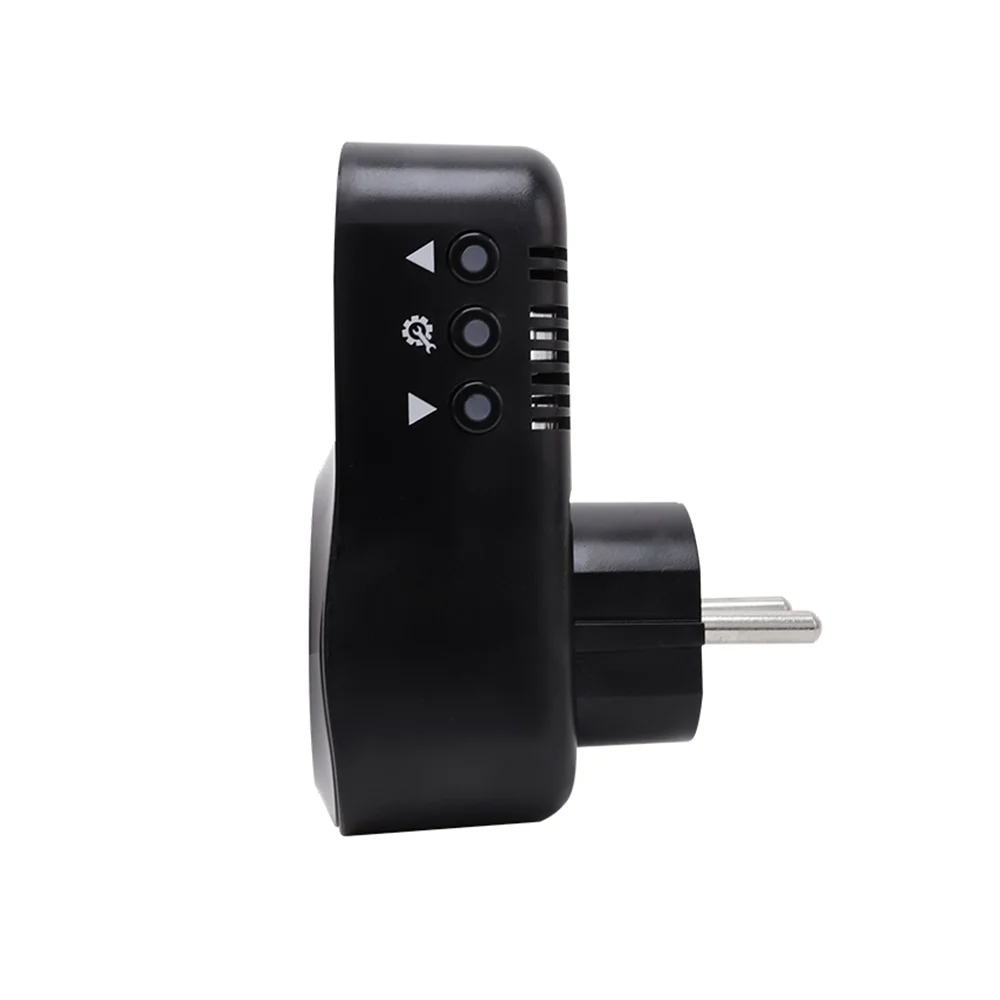
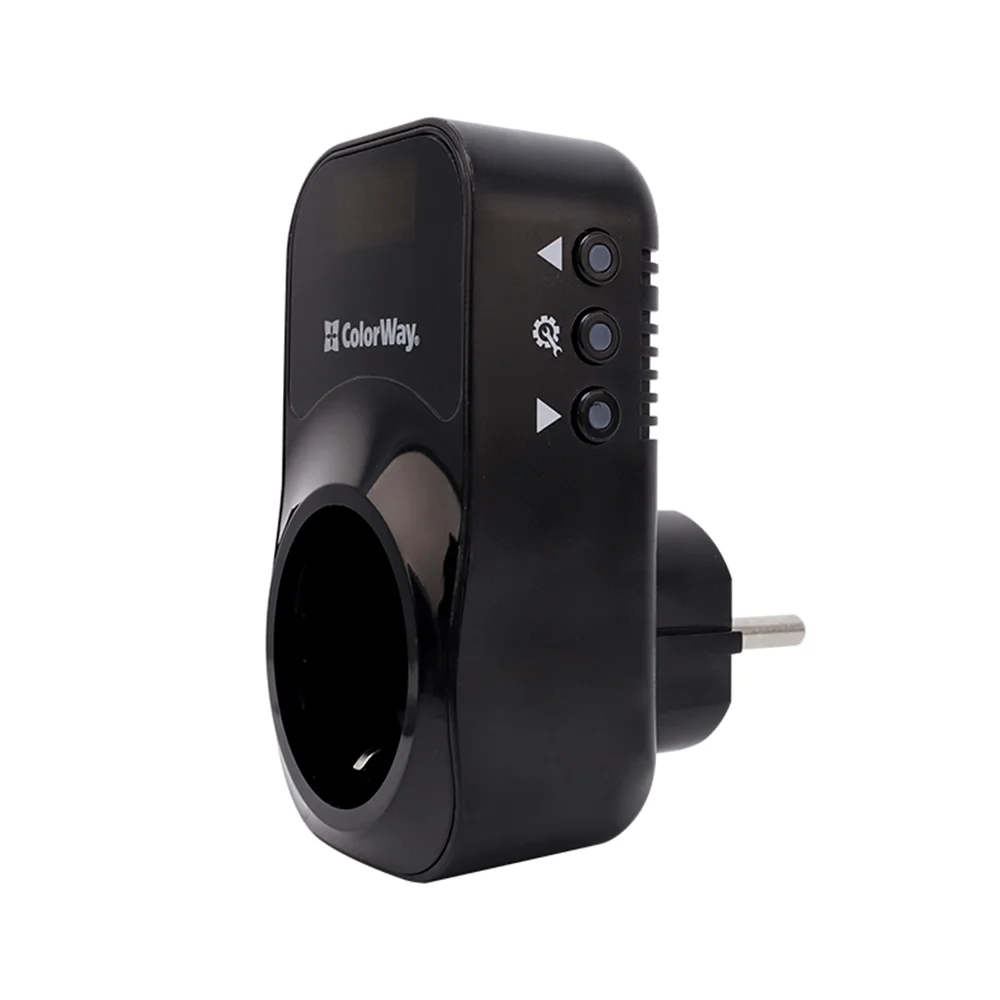
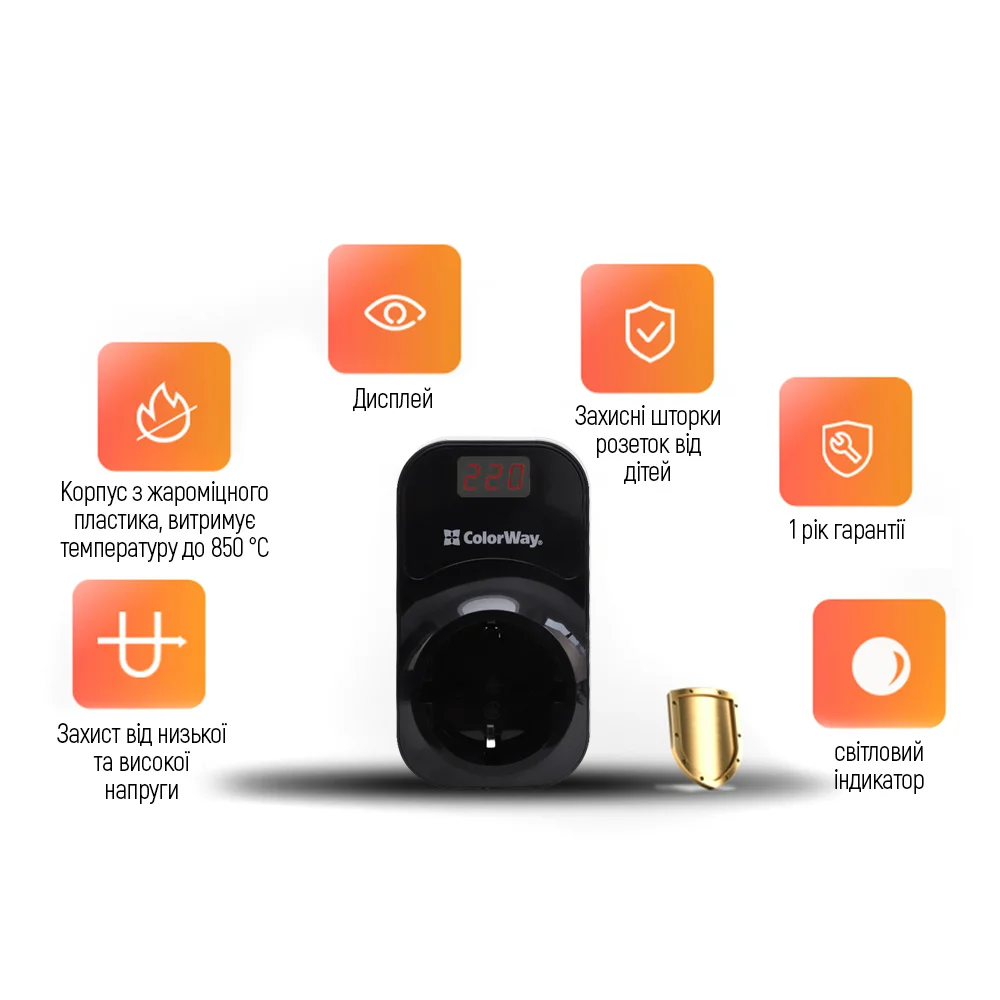
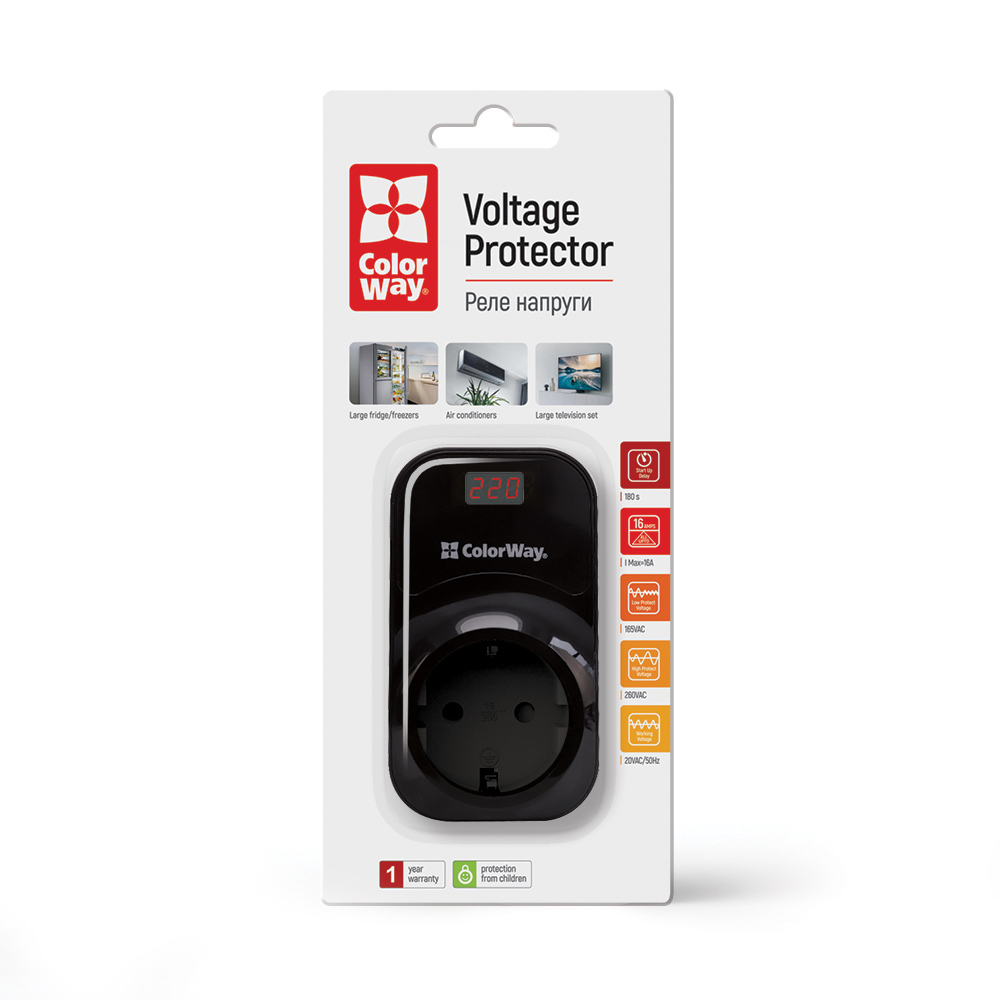
The ColorWay voltage relay is a special device designed to protect electrical appliances from voltage fluctuations. It continuously monitors the voltage in real-time and automatically disconnects connected devices if the voltage reaches critical levels. After the voltage returns to the set range, the relay switches back on with a slight delay. It features a display with real-time voltage indication and flexible settings for the upper and lower voltage cut-off limits, as well as an adjustable delay time from 5 to 999 seconds. The delay function is crucial for devices sensitive to short-term power interruptions (e.g., refrigerators, freezers, air conditioners).
Advantages:
- Minimalist design
- Compact size
- High-quality materials
- Fast response time
Easy installation in 3 steps:
- Unplug the device you want to protect.
- Insert the plug of the device into the ColorWay voltage relay.
- Plug the relay into the power outlet. Within 2 seconds, the display will show the voltage cut-off limits, then the delay timer will start counting down. After 30 seconds, the current voltage indicator will appear, and the device will activate to protect the connected equipment. If the voltage exceeds the set protection range, the relay will immediately disconnect the equipment. Once the voltage stabilizes, the relay will resume normal operation according to the set delay time.
Characteristics
| Type: | Voltage relay |
| Count of power outlets: | 1 |
| Nominal Voltage: | 250V |
| Nominal Current: | 16A |
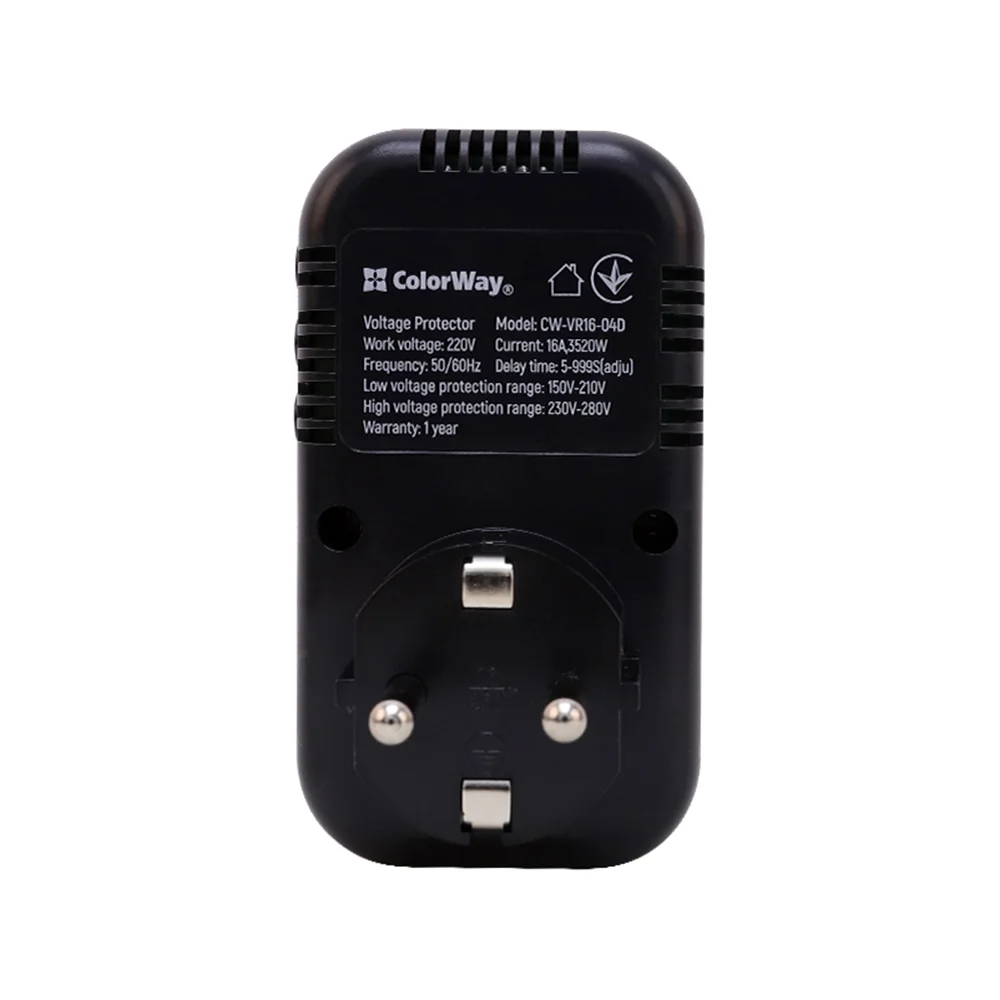
| Low voltage protection range: | 150-210V |
| Overvoltage protection range: | 230-280V |
| Color: | Black |
Features
- Operating Voltage: 220V / 50Hz AC
- Maximum Load: 16A, 3680W
- Delay Time: 5 to 999 seconds
- Low Voltage Protection Range: 150-210V (adjustable)
- Overvoltage Protection Range: 230-280V (adjustable)
- Operating Temperature: -5°C to 55°C
- Maximum Humidity: 85% RH
- Warranty: 12 months
Package Contents
FAQ about Voltage relay ColorWay (16A/3680W) 150V-210V/230V-280V DS4 Black (CW-VR16-04D)
01 What is a voltage relay for?
The relay continuously monitors the mains voltage. If it falls below or rises above the set limits, the relay disconnects the connected equipment. Once the voltage returns to normal, power is automatically restored after a set delay.
02 Does the relay stabilise the voltage?
No. A voltage relay is not a stabiliser. It neither raises nor lowers the voltage; it only disconnects the equipment when the voltage deviates dangerously from the set values and switches it back on once the mains returns to normal.
03 What upper and lower voltage limits should I set?
The nominal voltage of a household mains supply is 230 V. According to EN 50160, the normal range is approximately 207–253 V. We recommend setting specific limits based on the requirements of the connected equipment's manufacturer and the stability of the mains supply in your building.
04 Can I set, for example, a minimum of 180 V and a maximum of 260 V?
Technically, the relay allows such values within its available adjustment range. However, this is quite a wide range. Before configuring it, we recommend relying primarily on the permissible voltage of your specific appliances.
05 What reconnection delay should I set?
For electronics without electric motors, such as TVs, water heaters, computers and routers, 3–10 seconds is usually sufficient.
For compressor-based appliances, such as refrigerators, freezers and air conditioners, we recommend 3–5 minutes.
06 Why does a refrigerator or air conditioner need a 3–5 minute delay?
After shutdown, the compressor needs time for the pressure in the system to equalise. Restarting too quickly puts excessive load on the compressor.
07 Is the relay suitable for a refrigerator?
Yes. The key is to set the voltage limits and reconnection delay correctly. For a refrigerator, we recommend a delay of 3–5 minutes.
08 Is the relay suitable for a washing machine?
Yes. You just need to take the washing machine's power into account and not exceed the relay's permissible load. For loads with an electric motor, inrush currents must also be considered.
09 Can I connect a water heater or electric heater through the relay?
Yes, if the equipment's power is within the relay's permissible load. For high-power heaters, be sure to check the rated power of the device before connecting, and make sure the relay fits tightly between the plug and the socket.
10 Why is the permissible load for motors lower than 16 A / 3680 W?
Electric motors and compressors briefly draw a much higher current at start-up than during normal operation. Therefore, the permissible current for inductive loads is lower, up to 8 A / 1760 W.
11 Can I connect an extension cord and several appliances to the relay?
Yes, as long as their total load does not exceed the relay's permissible load. The correct setup is: socket → voltage relay → extension cord/surge protector → equipment.
12 What is the difference between a voltage relay and a surge protector?
A surge protector mainly protects against short impulse interference and surges, whereas the relay monitors the actual voltage level in the mains. If the voltage stays too high or too low for a long time, the relay completely disconnects the equipment.
13 Why does the relay sometimes switch off my appliances even though the lights are on?
This means the mains voltage has gone outside the limits you set. You can check the actual voltage on the display and, if necessary, adjust the settings, taking into account the permissible range of your equipment.
14 Why doesn't the relay switch the appliances back on immediately after power is restored?
The set reconnection delay is in effect. It gives the mains voltage time to stabilise and, for compressor-based equipment, also ensures a safe restart.
15 Is it normal for the relay to get slightly warm?
Slight warming during prolonged operation and under load is acceptable. If the housing becomes excessively hot, or you notice a smell, darkening of the plastic or unstable operation, disconnect the device and have it checked at the manufacturer's Authorised Service Centre within the warranty period.
16 Why can the relay fail after a severe voltage surge?
The relay is connected directly to the mains and is the first to take the hit from an emergency overvoltage. With very high voltage or a powerful short impulse, the overvoltage can go far beyond the relay's own normal operating range.
In such a situation, the relay's internal power supply, switching elements or protective components may be damaged. Equipment connected after the relay often remains undamaged, because the relay manages to disconnect it from the faulty mains in time. However, absolute protection of equipment cannot be
guaranteed in the event of an extreme overvoltage.
17 If the maximum threshold can be set to 280 V, does that mean the relay can withstand any voltage above 280 V?
No. 280 V is the maximum setting for the cut-off threshold, not the maximum permissible emergency voltage for the relay's own electronics. A significantly higher voltage or an impulse surge can damage any device connected directly to the mains.
18 Will the relay protect against all possible mains faults?
The relay provides good protection against prolonged overvoltage or undervoltage and disconnects the equipment when the voltage goes outside the set limits. However, for comprehensive protection of the electrical network against powerful impulse surges, for example during grid faults or lightning strikes,
dedicated surge protection devices may also be used.